

Dizziness & Vertigo
Dizziness, Vertigo, and BPPV: What Actually Helps
Reviewed by Dr. Dustin Dukart, DC
“Vertigo” gets used for a lot of different sensations — lightheadedness, unsteadiness, the room genuinely spinning. They don’t all have the same cause, and they don’t all call for the same approach. This is a plain-language look at the most common cause of true spinning vertigo, and the one approach that has strong evidence behind it.
Book Your Visit → or call (612) 314-9482
The headline finding: BPPV — the most common cause of true spinning vertigo — responds strongly to a specific repositioning maneuver (the Epley). Reviews report roughly 8 in 10 people improve after one or a few sessions.
BPPV: The Most Common Cause of Spinning Vertigo
Benign paroxysmal positional vertigo (BPPV) happens when tiny calcium crystals in the inner ear come loose and drift into one of the balance canals, where they don’t belong. The hallmark is brief spinning — usually under a minute — triggered by a change in head position: rolling over in bed, looking up, lying back at the dentist. It’s the single most common cause of vertigo, and it’s very treatable.
The Treatment With Strong Evidence: Canalith Repositioning
For BPPV affecting the most common (posterior) canal, the treatment is a specific sequence of guided head and body movements — a canalith repositioning maneuver, the best known being the Epley maneuver — that walks the loose crystals back out of the canal. The American Academy of Otolaryngology–Head and Neck Surgery clinical practice guideline gives this a strong recommendation based on high-quality evidence, and notes you don’t need to keep your head propped up or restrict activity afterward. A Cochrane review found the Epley maneuver effective, and reviews report that roughly 8 in 10 people improve after one or a few sessions. The same guideline also notes that simply observing with follow-up is a reasonable option, since many cases settle on their own.
An Honest Word on “Cervicogenic” Dizziness
You’ll see claims that neck problems cause vertigo and that neck treatment resolves it. “Cervicogenic dizziness” is a real diagnosis, but it’s a diagnosis of exclusion — meaning other causes have to be ruled out first — and the evidence for treating it is limited. It’s usually a vague unsteadiness rather than true spinning. We don’t claim chiropractic care broadly “treats vertigo.” What’s reasonable is this: if your dizziness comes with genuine neck pain and stiffness, and the workup has ruled out inner-ear and other causes, then treating the neck pain on its own merits is fair — with clear expectations about what it can and can’t do for the dizziness.
What We Can Do
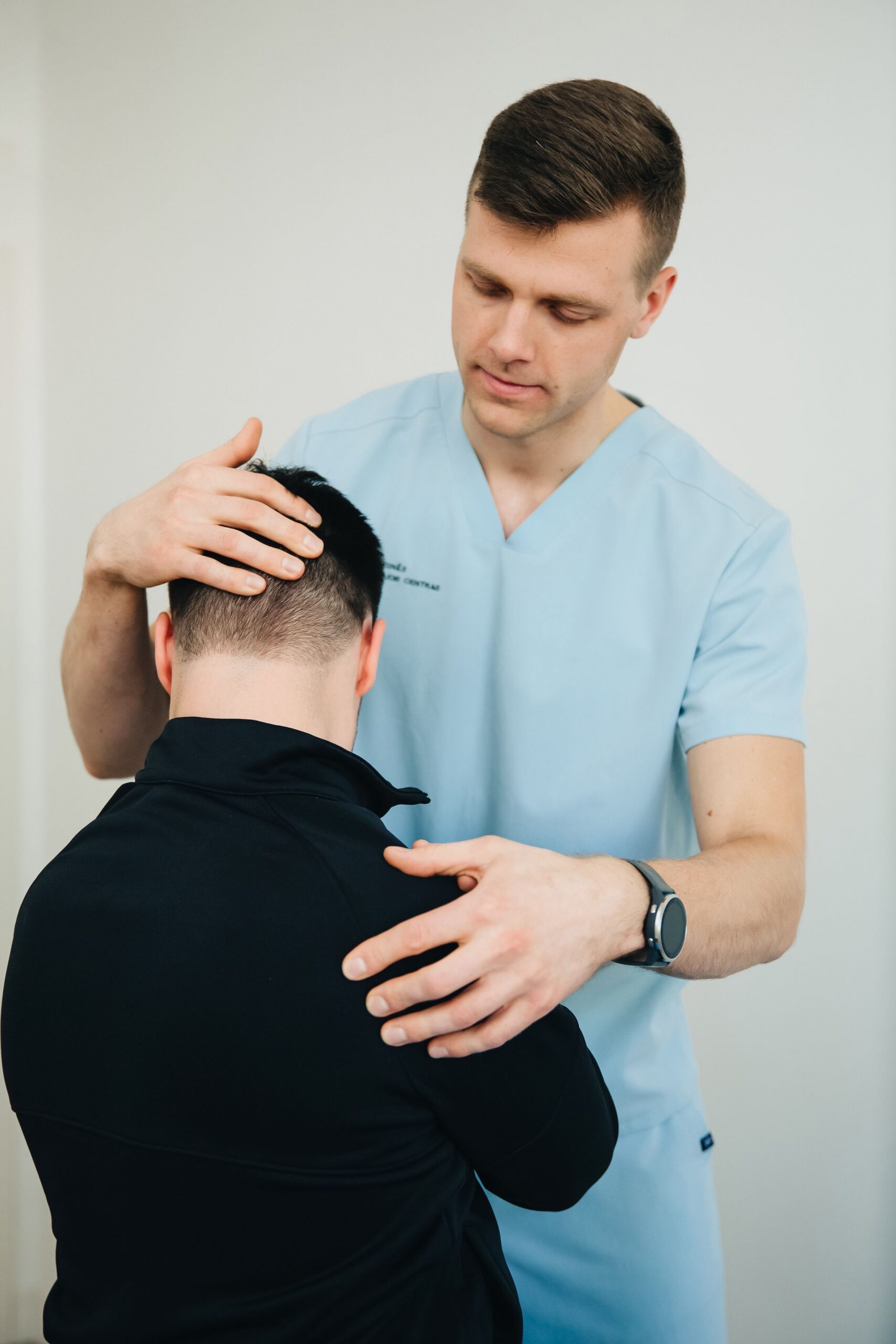
We can take a careful history, screen for the positional pattern that points to BPPV (the Dix-Hallpike test), and — for a clear posterior-canal BPPV — perform the repositioning maneuver. If the picture doesn’t fit BPPV, or if anything on the exam is a red flag, the right move is a referral to your physician or an ENT, not a treatment plan built on a guess.
When Dizziness Is an Emergency
Call 911 or go to the ER if dizziness or vertigo comes with any of these — they can signal a stroke or another serious cause:
- Sudden severe headache, or “the worst headache of my life”
- Double vision, trouble speaking, or a drooping face
- Weakness or numbness on one side of the body
- Trouble walking or severe imbalance that doesn’t let up
- New hearing loss in one ear along with the vertigo
- Vertigo that is constant (not triggered by position) and lasts hours to days
Not Sure What Kind of Dizziness You Have?
Most new patients are seen within a few days.
Book Your Visit → or call (612) 314-9482
Related reading: how we examine and treat neck pain.
References
- Bhattacharyya N, et al. Clinical Practice Guideline: Benign Paroxysmal Positional Vertigo (Update). Otolaryngol Head Neck Surg. 2017.
- Hilton MP, Pinder DK. The Epley (canalith repositioning) manoeuvre for benign paroxysmal positional vertigo. Cochrane Database of Systematic Reviews.
- Palmeri R, Kumar A. Epley Maneuver. StatPearls. NIH.